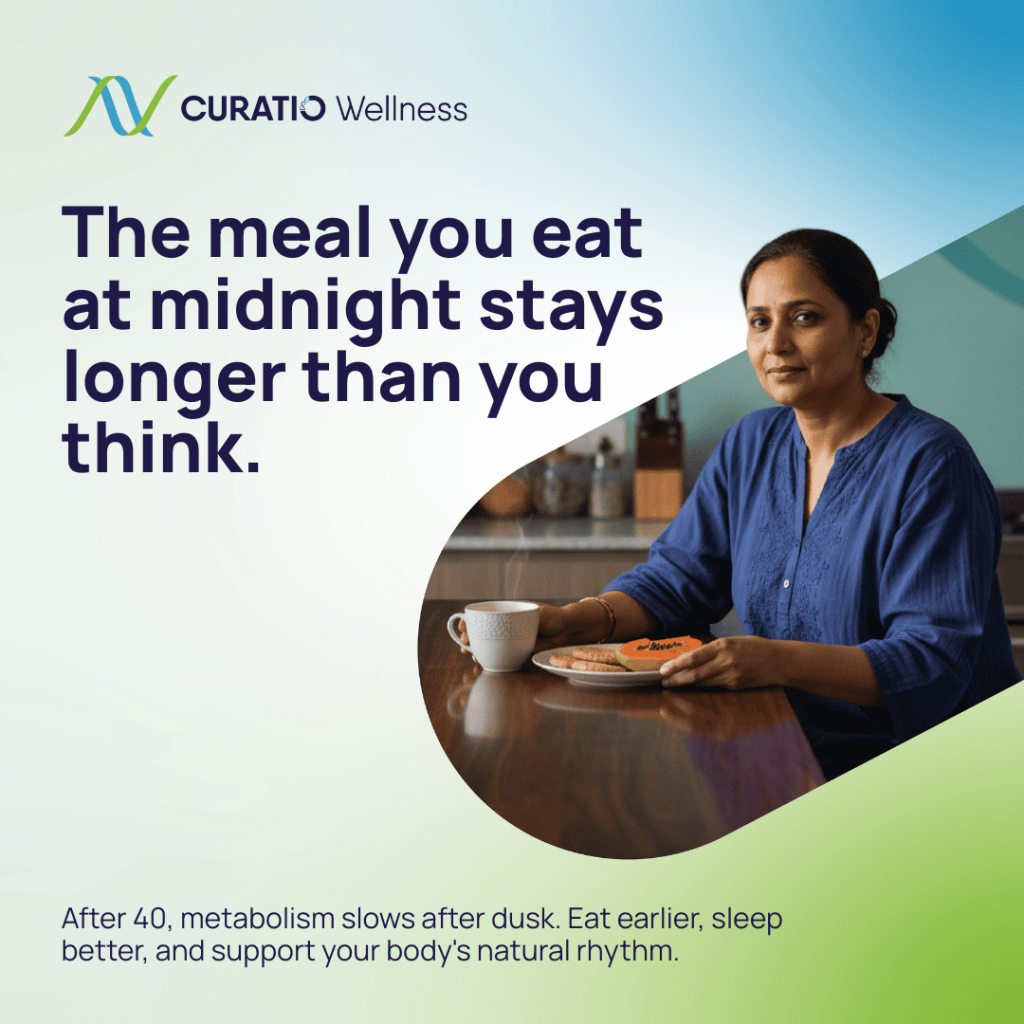
The Meal You Eat at Midnight Stays Longer Than You Think

Most of us know late dinners aren’t ideal, but the reason goes beyond calories. After 40, your circadian rhythm naturally slows—meaning digestion, insulin sensitivity, and metabolism all drop after dusk. When you eat close to midnight, glucose stays high for longer, and your body stores more instead of using it.

If you often wake up tired or craving sugar, it might not be poor sleep—it could be timing. Small shifts make a big difference:

Finish dinner 2–3 hours before bed.
Swap late-night meals for herbal tea or light fruit.
Keep post-dinner walks short but consistent.

Your body doesn’t just need food—it needs rhythm. Metabolic health begins with timing, not restriction.

For educational awareness only. Please consult a licensed clinician for personalised advice.
#MetabolicHealth #HealthyAging #MalaysiaWellness #CuratioWellness #SleepHealth #NightEating #HormoneBalance #MidlifeCare

Explore More Insights

wellnesslibrary300426
The Unseen Link Between Men's Health and Heart Function
wellnesslibrary290426
A Window to Your Heart's Health
wellnesslibrary280426
Beyond the Scale: The Unseen Factors in Weight Management
wellnesslibrary270426
Understanding Prediabetes Screening Guidelines
wellnesslibrary260426
The Food Environment Effect: How Access to Healthy Food Shapes Diabetes Management
wellnesslibrary250426
The Unseen Connection: Diabetes and Men's Health

Categories

Wellness & Lifestyle
Nutrition & Diet
Sleep & Stress Management
Fitness & Movement
Genetics & Personalised Health
Mind-Body Wellness
Product & Service Spotlights
Success Stories & Case Studies
Health Science & Research
Wellness & Lifestyle
Nutrition & Diet
Sleep & Stress Management
Fitness & Movement
Genetics & Personalised Health
Mind-Body Wellness
Product & Service Spotlights
Success Stories & Case Studies
Health Science & Research