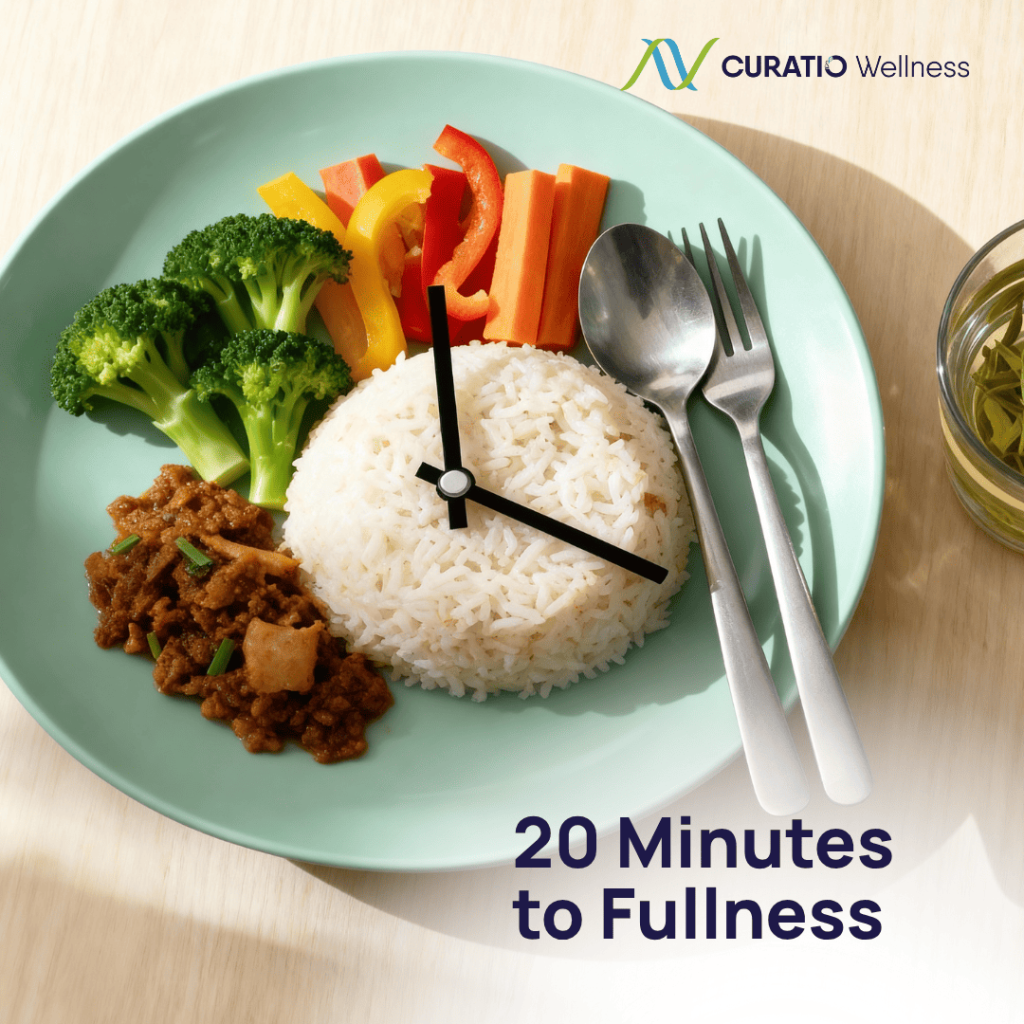
20 Minutes to Fullness: Why Eating Slowly Works

We live in a fast-paced world, but your body still operates on nature’s timing. It takes roughly 20 minutes for your stomach and brain to communicate that you’ve had enough—a signal managed by hormones like leptin and GLP-1.

When we eat too quickly, the body doesn’t get the chance to send that message. The result? Overeating, bloating, and that post-meal crash many mistake for “low energy.”

Try this instead:

Put your fork down between bites.
Take a few deep breaths mid-meal.
Set aside devices—let your senses lead, not your screen.
Stop at “satisfied,” not “stuffed.”

Mindful eating isn’t a trend—it’s your body’s original rhythm.

For educational awareness only. Please consult a licensed clinician for personalised advice.
#MindfulEating #MetabolicHealth #CuratioWellness #MalaysiaWellness #HealthyHabits #NutritionAwareness #DigestiveCare #MidlifeHealth

Explore More Insights

wellnesslibrary300426
The Unseen Link Between Men's Health and Heart Function
wellnesslibrary290426
A Window to Your Heart's Health
wellnesslibrary280426
Beyond the Scale: The Unseen Factors in Weight Management
wellnesslibrary270426
Understanding Prediabetes Screening Guidelines
wellnesslibrary260426
The Food Environment Effect: How Access to Healthy Food Shapes Diabetes Management
wellnesslibrary250426
The Unseen Connection: Diabetes and Men's Health

Categories

Wellness & Lifestyle
Nutrition & Diet
Sleep & Stress Management
Fitness & Movement
Genetics & Personalised Health
Mind-Body Wellness
Product & Service Spotlights
Success Stories & Case Studies
Health Science & Research
Wellness & Lifestyle
Nutrition & Diet
Sleep & Stress Management
Fitness & Movement
Genetics & Personalised Health
Mind-Body Wellness
Product & Service Spotlights
Success Stories & Case Studies
Health Science & Research