1. The New Language of Health
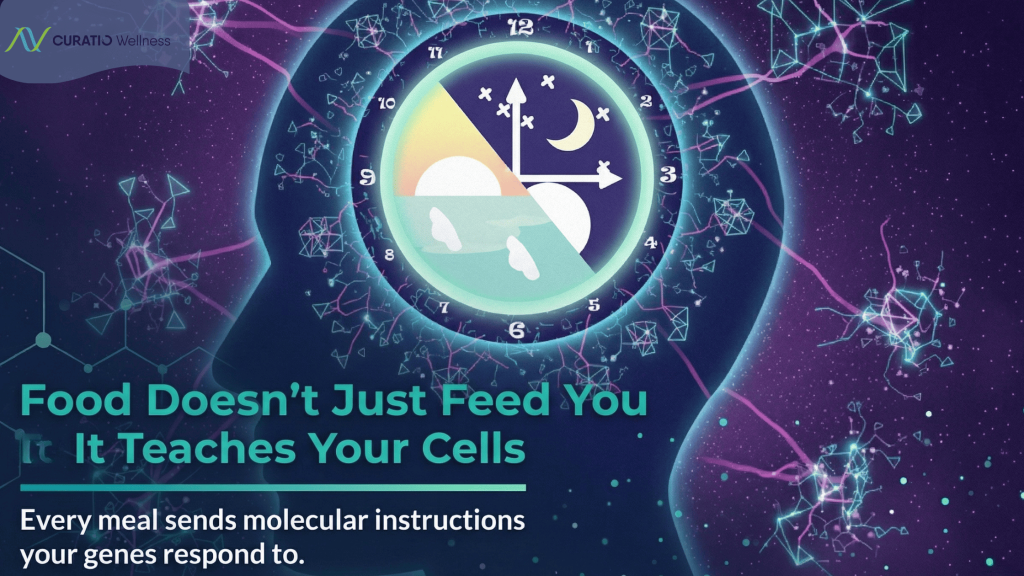
Every meal you eat is a set of messages, not just calories.
What researchers once called “nutrition”, energy and macronutrients, is now understood as information.
Your food communicates directly with your genes through a process called nutrigenomics, the study of how nutrients influence gene activity.
Your DNA isn’t a fixed script. It’s a responsive code waiting for environmental input. When you eat, your cells “read” that input and decide what to activate or silence.
Protein synthesis, inflammation levels, energy production, and detoxification are all partly determined by this molecular conversation between diet and DNA.
It’s why two people can eat the same plate of food and experience entirely different outcomes. Their genes, microbiome, and metabolic context interpret that meal differently, like two readers interpreting the same sentence through different lenses.
2. Beyond “Good” and “Bad” Foods
Traditional nutrition divides food into categories: healthy vs. unhealthy, good fats vs. bad fats, complex vs. simple carbs.
Epigenetic nutrition moves past these binaries. It asks: What does this nutrient tell your cells to do right now?
-Omega-3 fats tell your genes to reduce inflammation and strengthen cell membranes.
-Polyphenols from berries, tea, or turmeric activate genes linked to detox and brain protection.
-Refined sugars and trans fats, on the other hand, turn on genes related to oxidative stress and insulin resistance.
Think of each meal as a data upload. You’re not feeding your body, you’re programming it. The clearer the information, the smoother the biological response.
3. Epigenetics: The Dimmer Switch of DNA
Your DNA doesn’t change, but the way it’s expressed does.
Epigenetic marks, small chemical tags such as methyl groups and acetyl groups, act like dimmer switches. They turn genes on, off, or adjust their intensity.
Diet is one of the most powerful epigenetic forces we know.
For instance:
-Green vegetables supply methyl donors like folate that silence genes driving chronic inflammation.
-Sulforaphane in broccoli boosts detox pathways by activating the Nrf2 gene network.
-Choline and betaine from eggs help stabilise DNA methylation, essential for brain and liver health.
This doesn’t happen overnight. Epigenetic changes accumulate, just like stress or recovery. But over months and years, they shape your risk for diabetes, heart disease, and even mood disorders.
4. The Microbiome Connection
Your gut microbes are the translators in this gene-food dialogue.
They take undigested fibres, polyphenols, and amino acids, and convert them into short-chain fatty acids and other metabolites that speak directly to your cells.
When the microbiome is diverse, these messages stay balanced, supporting insulin sensitivity, emotional stability, and immune regulation.
But when diversity drops (from antibiotics, poor diet, or chronic stress), your cells receive distorted signals, overactivation of inflammatory genes, sluggish energy metabolism, and impaired hormonal feedback.
Simply put: what you feed your microbes determines how your genes behave.
A Mediterranean-style diet rich in plant fibres, good fats, and fermented foods has repeatedly been shown to create the healthiest molecular “conversation.”
5. Personalized Nutrition: The Next Frontier
In precision medicine, doctors are moving beyond population averages to gene-guided nutrition plans.
For example:
-Individuals with variants in the MTHFR gene may require higher folate intake.
-Those with slower caffeine metabolism genes (CYP1A2) are more sensitive to coffee and may experience elevated blood pressure with excess caffeine.
-Certain genetic profiles metabolise omega-3s poorly, meaning diet alone may not suffice, supplementation becomes therapeutic, not optional.
No two metabolisms speak the same language, so the advice shouldn’t either.
6. Metabolic Memory and the Concept of “Food Timing”
When you eat may be as powerful as what you eat.
Your metabolism runs on a circadian rhythm, and every organ, liver, pancreas, gut, has its own internal clock.
Eating late at night sends conflicting signals to your genes, confusing the body’s repair schedule.
Research from the University of California showed that restricting food intake to an 8–10-hour window improved glucose control and reduced inflammatory gene activation, even without changing calories.
Morning light, breakfast timing, and evening fasting all align gene expression with your sleep–wake cycle.
In simpler terms: your genes keep office hours. Feed them accordingly.
7. Stress, Cortisol, and Gene Noise
Food messages don’t land well in a stressed body.
When cortisol stays high, gene expression shifts toward short-term survival, raising blood sugar, increasing inflammation, and slowing repair enzymes.
This is why mindful eating and stress management are now part of clinical nutrition, not just wellness advice.
Breathing before meals or stepping away from screens quiets the stress response, letting digestion and gene signalling, happen properly.
It’s a physiological conversation that requires stillness to be heard.
8. From Data to Decisions: How Curatio Uses This Science
At Curatio Wellness, clinicians interpret not only blood sugar or cholesterol but the pattern behind them.
Through epigenetic mapping and biomarker tracking, they assess how diet, sleep, and environment interact with your genetic baseline.
For instance:
-A patient with normal sugar levels but high fasting insulin may be in early metabolic compensation, dietary fibre and circadian realignment are prescribed before medication.
-Another patient showing elevated inflammation markers may receive antioxidant-rich meal timing protocols.
-The goal isn’t restriction; it’s translation, teaching patients how to speak the body’s language again.
9. The Emotional Layer: Food as Trust
When people understand how deeply food communicates with their biology, anxiety around eating tends to fall.
Instead of guilt, there’s curiosity.
Instead of perfection, there’s participation.
Trust grows, in the process, in the clinician, and most importantly, in one’s own body.
Your meals aren’t moral choices; they’re molecular conversations.
And like any relationship, they improve with attention, not fear.
10. The Takeaway: You Are the Programmer
You can’t rewrite your DNA, but you can re-train it every single day.
Each bite, breath, and bedtime acts as a line of code in your biological program.
When those inputs stay consistent, real food, balanced light exposure, regular movement, restorative sleep, your genes respond by producing proteins of health, not distress.
Your body doesn’t need perfection.
It needs clarity, the right signals, at the right time.
So tonight, when you sit down for a meal, remember:
You’re not just feeding your body.
You’re writing tomorrow’s biology.What part of your daily eating pattern feels the hardest to stabilise? If you would like support making sense of it, Curatio Wellness offers guidance grounded in nutrition science.
#CuratioWellness #Nutrigenomics #EpigeneticNutrition #FoodAsMedicine #MetabolicHealth #MalaysiaWellness #RootCause #PrecisionCare #GeneHealth #PreventiveCare #FunctionalMedicine