When Stress Hits at Night, Your Hormones Often Misfire First

You’ve closed your laptop, feel exhausted, but your brain won’t switch off.
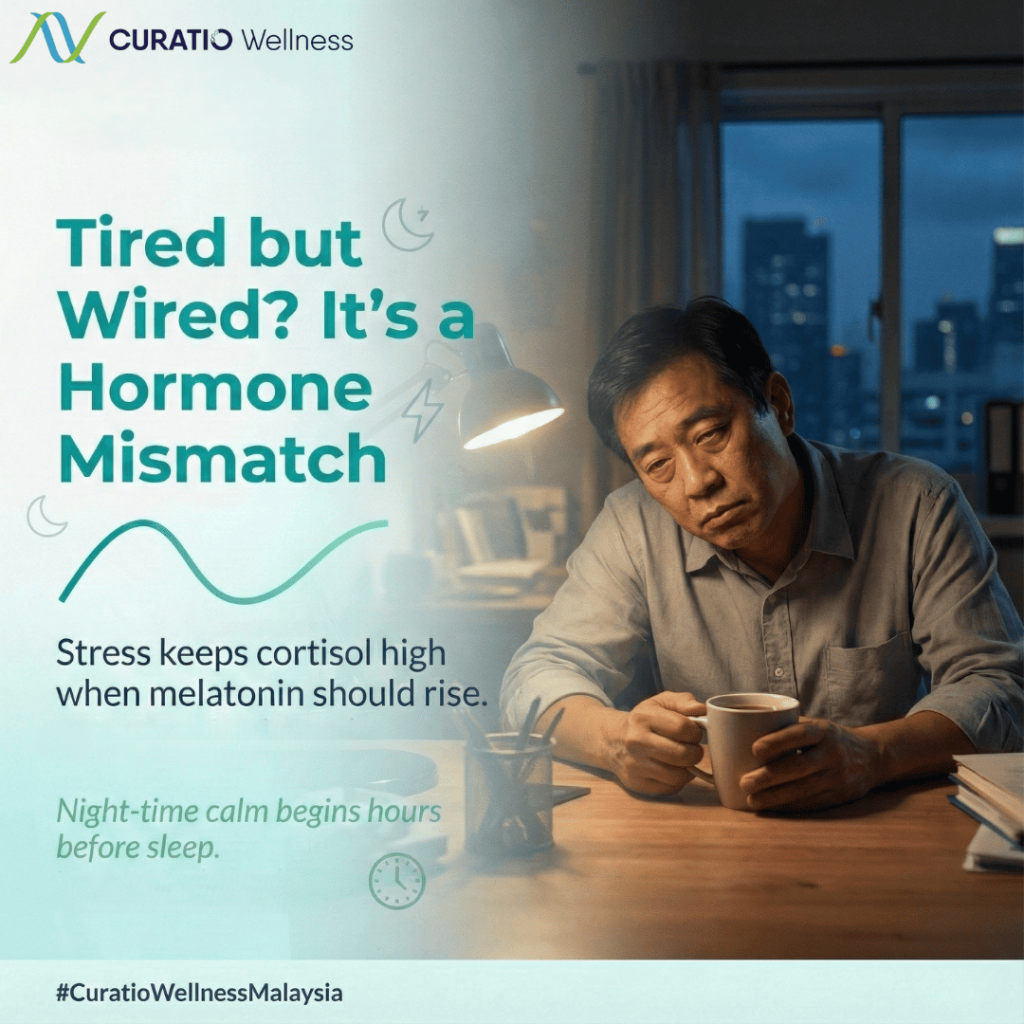
That “tired but wired” state isn’t insomnia, it’s a hormonal mismatch.

Cortisol, the stress hormone, should drop sharply in the evening. But late caffeine, blue light, or even long mental focus can keep it elevated, while melatonin, your sleep signal, stays delayed. The result: a restless mind in a sleepy body.

Researchers now call this cortisol–melatonin inversion, a growing cause of fatigue, anxiety, and shallow recovery sleep.
The fix isn’t in medication, it’s in rhythm: dim lights after sunset, step outside in morning light, and avoid screens an hour before bed.

Your sleep doesn’t start at night. It starts with how you end your day.
If you’ve been noticing this ‘tired but wired’ pattern in your own evenings, Curatio Wellness can help you understand what your hormones may be signalling and how rhythm influences recovery.

#CuratioWellness #SleepScience #CortisolBalance #ClinicalInsight #MalaysiaWellness #RootCause

Explore More Insights

wellnesslibrary300426
The Unseen Link Between Men's Health and Heart Function
wellnesslibrary290426
A Window to Your Heart's Health
wellnesslibrary280426
Beyond the Scale: The Unseen Factors in Weight Management
wellnesslibrary270426
Understanding Prediabetes Screening Guidelines
wellnesslibrary260426
The Food Environment Effect: How Access to Healthy Food Shapes Diabetes Management
wellnesslibrary250426
The Unseen Connection: Diabetes and Men's Health

Categories

Wellness & Lifestyle
Nutrition & Diet
Sleep & Stress Management
Fitness & Movement
Genetics & Personalised Health
Mind-Body Wellness
Product & Service Spotlights
Success Stories & Case Studies
Health Science & Research
Wellness & Lifestyle
Nutrition & Diet
Sleep & Stress Management
Fitness & Movement
Genetics & Personalised Health
Mind-Body Wellness
Product & Service Spotlights
Success Stories & Case Studies
Health Science & Research