Comfort Food Without the Crash: Reducing Anxiety Around Eating
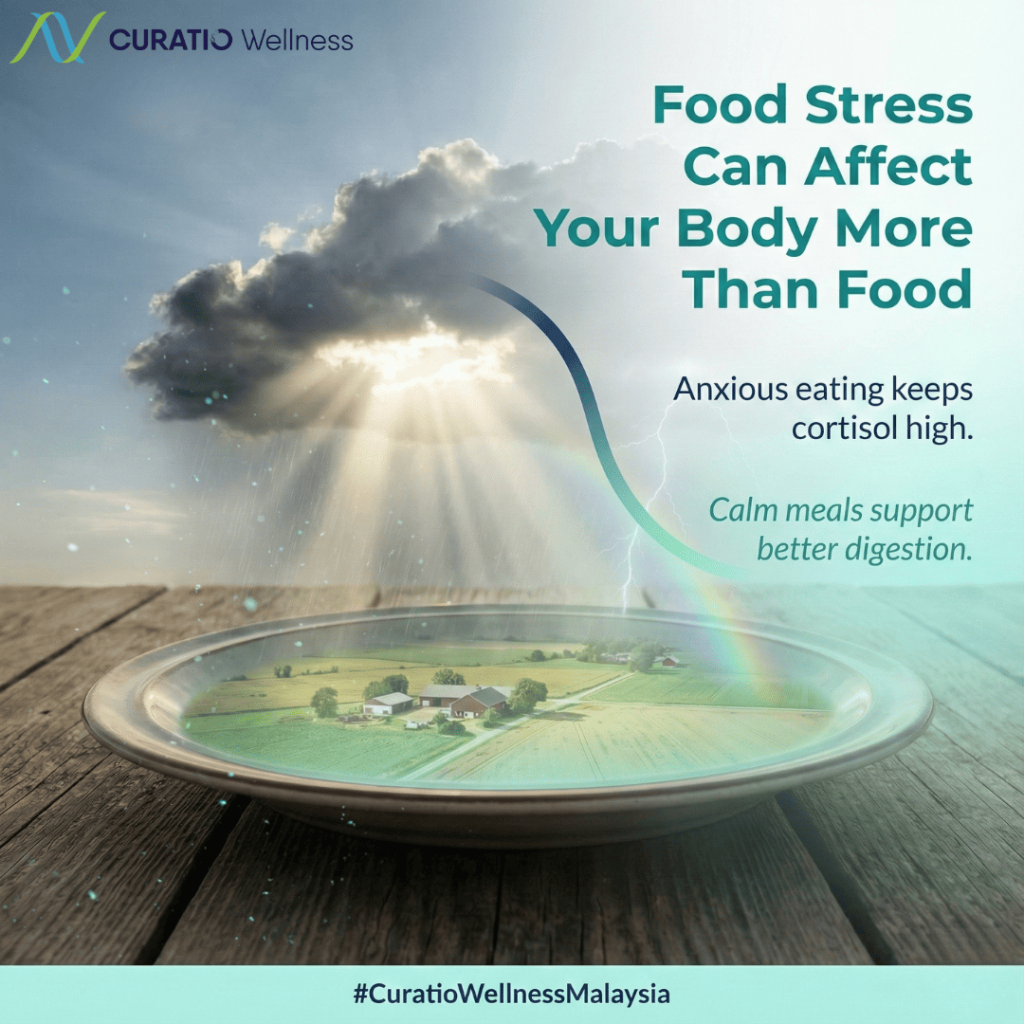
Many people try to “eat perfectly,” only to feel guilt the moment they choose something comforting. Research suggests that the stress surrounding food choices can sometimes affect the body more than the food itself.
This pattern is known as cognitive restraint, a state of constant monitoring, judging, or mentally negotiating every bite. When eating becomes tense, cortisol levels rise, digestion slows, and the body may become more inclined to store energy rather than use it efficiently.
This response is not about willpower. It reflects normal physiology reacting to perceived stress signals.
A calmer alternative is intuitive eating, paying attention to hunger cues, choosing foods that feel grounding, and noticing how the body responds afterward. When meals feel less pressured, cortisol levels tend to settle, digestion improves, and eating becomes more satisfying rather than stressful.
Food does not need to feel like a test. A regulated nervous system often supports healthier patterns naturally, without rigid rules.
For gentle, science-based nutrition insights you can explore at your own pace, you can follow Curatio Wellness.