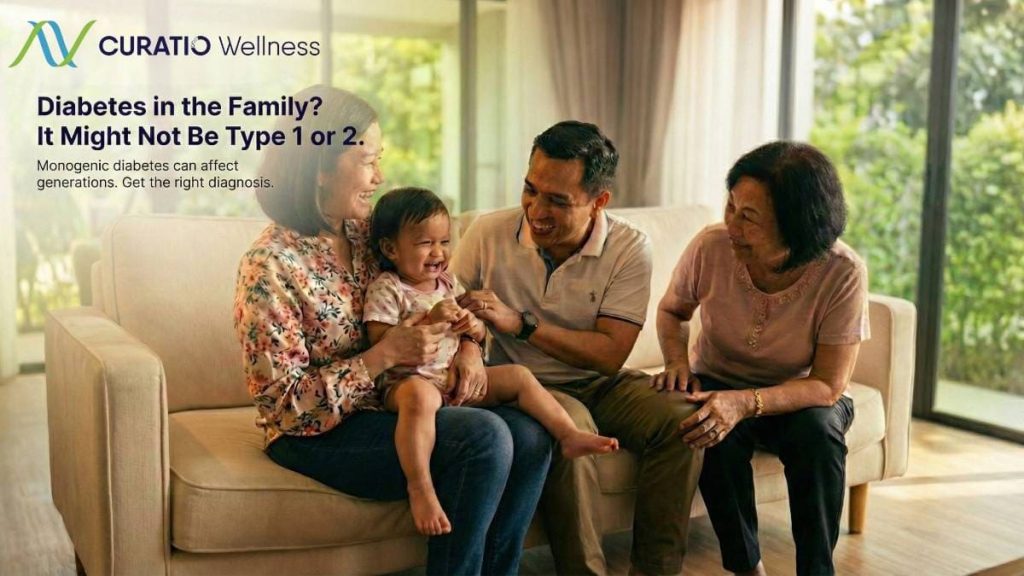
Most people learn diabetes in two buckets, type 1 and type 2. There is a third category that is more common than many realise and often missed in real world care.
Why It Is Often Missed
A 2025 evidence based review highlights that monogenic diabetes is frequently misdiagnosed as type 1 or type 2 diabetes. When the diagnosis is correct, treatment choices can change and family screening can become more targeted and potentially risk reducing, because the condition is inherited in many cases.
What Is Monogenic Diabetes
Monogenic diabetes is caused by a change in a single gene that affects insulin production or secretion. It is different from the autoimmune pathway seen in type 1 diabetes and different from the insulin resistance dominant pattern seen in type 2 diabetes.
Some subtypes respond well to specific oral medications instead of insulin. Some require different monitoring strategies. The key point is not the label, but matching the biology to the right plan.
Who It Is Relevant For
Monogenic diabetes may be relevant if you or a family member fits one or more of the following patterns.
Diabetes diagnosed at a young age, especially before 25
A strong family history across generations
A diagnosis of type 1 diabetes without typical autoimmune markers
Stable mild fasting hyperglycaemia over many years
Diabetes diagnosed during pregnancy that does not fit the usual risk profile
This does not mean everyone needs genetic testing. It means the right people should not be missed.
Why This Is a Public Health Issue
Misdiagnosis has real consequences. Some people may use insulin unnecessarily. Others may not receive the most effective medication for their subtype. Families may miss the opportunity for early screening. When the correct genetic diagnosis is made, care becomes more efficient and more preventive.
This is where gene mapping is not an extra step, but a form of precision that can reduce long term burden.
Curatio Wellness Approach
At Curatio Wellness, our diagnostics first approach aims to reduce guesswork. For individuals with unusual patterns, early onset disease, or strong family history, gene mapping can help clarify whether the pathway is type 2 insulin resistance, autoimmune type 1 diabetes, or a monogenic subtype that requires a different treatment plan and different family screening guidance.
What to Do If This Sounds Like You
Start with your story and your data. Gather age at diagnosis, family history, prior antibody testing if available, C peptide results when done, and your glucose trends over time. Then discuss whether genetic evaluation is appropriate.
Summary
Monogenic diabetes is often misdiagnosed as type 1 or type 2 diabetes. Correct genetic diagnosis can change treatment decisions and enable targeted screening for family members. This is a practical public health use case for precision diagnostics and gene mapping.
#CuratioWellness #RareDiseaseDay #MonogenicDiabetes #GeneticTesting #PrecisionHealth #GeneMapping #DiabetesCare #PreventiveHealth #FamilyHealth #MetabolicHealth #WellnessAfter40