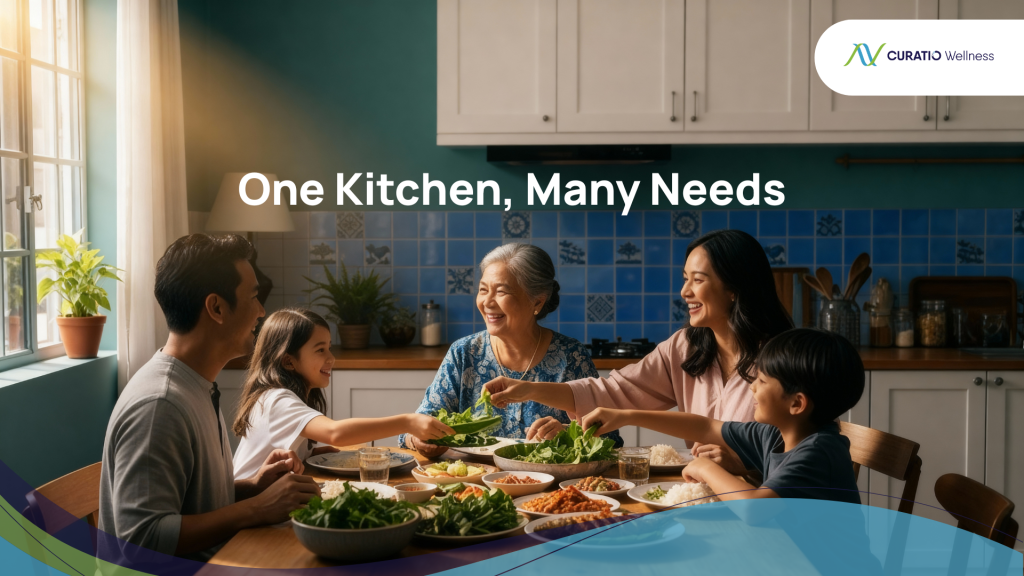
Every Malaysian household has one kitchen, but often many health needs. A father watching his sugar levels. A mother managing weight and energy. A grandparent on a low salt diet. And children who simply want food that tastes good.
Keeping everyone happy and healthy can feel like a full time job. But eating well as a family does not mean cooking five different meals. With small and consistent changes, one kitchen can nourish every stage of life.
1. Food Is Family and Culture
In Malaysia, food is more than nutrition. It is identity. From nasi lemak mornings to teh tarik nights, every meal carries comfort and connection. That is why restrictive diets often fail. They separate people from tradition.
The goal is not to remove culture from the table but to give it a healthier rhythm.
You do not have to give up your favourites. You simply need to meet them halfway. Simple swaps can protect health while keeping the joy of eating.
Nasi lemak: keep the sambal, but add boiled egg and cucumbers for protein and fibre.
Roti canai: enjoy occasionally, but pair it with dhal instead of sweet tea.
Teh tarik: ask for kurang manis or try herbal tea after dinner.
Healthy eating begins with awareness, not absence.
2. The Science of Shared Health
When one family member eats better, others often follow naturally. Studies show that shared meals improve nutrition quality, reduce stress, and strengthen family relationships.
Families who eat together regularly often experience:
Better portion control
Higher intake of fruits and vegetables
Lower rates of obesity and lifestyle related disease
It is not only about what is on the plate. The environment around the meal matters as well. When mealtime becomes routine, the body learns stability. When it becomes mindful, digestion improves.
The rhythm of family life including timing, tone, and togetherness shapes health as much as nutrients do.
3. The Malaysian Plate, Modernised
Malaysia’s rich cuisine can remain flavourful while becoming more balanced. Small adjustments can make a meaningful difference.
Breakfast
Replace sugary cereals with oats or whole grain toast.
Add protein such as boiled eggs, yogurt, or tofu to maintain steady energy.
Reduce sugar in coffee gradually. Taste buds usually adapt within two weeks.
Lunch
Use smaller plates to encourage mindful eating.
Choose grilled, steamed, or stir fried proteins instead of deep fried dishes.
Add one fresh vegetable side such as ulam or salad.
Dinner
Eat lighter and earlier, ideally finishing two to three hours before bedtime.
Include soups or broths to help hydration and satiety.
Keep family dinners free from screens to encourage mindful eating.
These habits are not strict rules. They are flexible frameworks that can adapt to any family schedule or budget.
4. The Hidden Ingredient: Communication
Healthy eating begins with conversation, not control. When changes feel forced, resistance grows, especially among children or elderly family members.
Instead, invite participation.
Ask children to help choose vegetables or assist with preparing a simple dish.
Explain why you are reducing sugar or oil rather than simply enforcing it.
Celebrate small improvements rather than expecting perfection.
A supportive environment turns health into teamwork. Over time, food becomes a bridge rather than a battleground.
5. Smart Pantry, Shared Health
Your grocery list often determines your habits before cooking even begins. A well planned pantry makes healthy choices easier.
Stock staples such as brown rice, lentils, eggs, oats, and frozen vegetables.
Prepare ahead by batch cooking grains or proteins for busy days.
Keep healthier snacks such as nuts, seeds, and fresh fruit easily accessible.
Follow the eye level rule by placing healthier foods where they are easiest to see.
These simple visual cues guide behaviour without arguments. When decisions are easier at mealtime, consistency improves.
6. Family Health Beyond the Kitchen
Nutrition is only one part of family wellbeing. Movement, rest, and emotional balance also influence long term health.
Walk together after dinner. Even ten minutes can help regulate glucose levels.
Encourage hydration through small family challenges or reminders.
Turn off devices thirty minutes before bedtime to support better sleep.
Make time for regular family conversations and emotional check ins.
Holistic wellness grows when food, rest, and daily rhythm align.
7. Healing Generational Habits
Many adults carry eating patterns from childhood. Finishing every bite, skipping breakfast, or associating love with large portions were common practices in earlier generations.
These habits developed during times when scarcity was the concern.
Today the challenge is often the opposite. Food is abundant but awareness may be lacking. Healing does not mean blaming the past. It means updating old habits.
You can honour traditional recipes while adapting them for modern health needs. Keep the sambal but reduce the sugar. Keep the curry but balance the portion size.
When change feels like continuity, it becomes sustainable.
8. The Psychology of Eating Together
Research from global nutrition studies shows that shared meals improve both physical and emotional health.
Families who eat together regularly experience:
Lower anxiety and depression rates
Better self esteem among teenagers
Stronger communication and empathy
When food becomes a space for connection, the body relaxes. Relaxation itself supports digestion and nutrient absorption. Wellness is therefore both emotional and biological.
9. Building Health as a Family Value
The goal is not to turn every dinner into a lesson about nutrition. Instead, model balance through everyday actions.
Children learn from observation rather than instruction. When they see adults drink enough water, move regularly, and approach food with appreciation instead of guilt, those behaviours become natural.
Health is not something we only teach. It is something we live.
Final Thought
One kitchen can serve many needs when love, rhythm, and awareness guide it. Start with simple steps. Swap one ingredient. Share one meal together. Take one evening walk.
Over time these small moments become habits. And habits become health.
The best nutrition plan is not the one that looks perfect on paper. It is the one your whole family can enjoy together.
For educational awareness only. Please consult a licensed clinician for personalised advice.
#CuratioWellness #MalaysiaWellness #FamilyHealth #HealthyEating #MidlifeWellness #FunctionalNutrition #PreventiveCare #HolisticHealth #MetabolicWellness #HealthyHabits #RootCauseCare #NutritionAwareness #HealthyAging