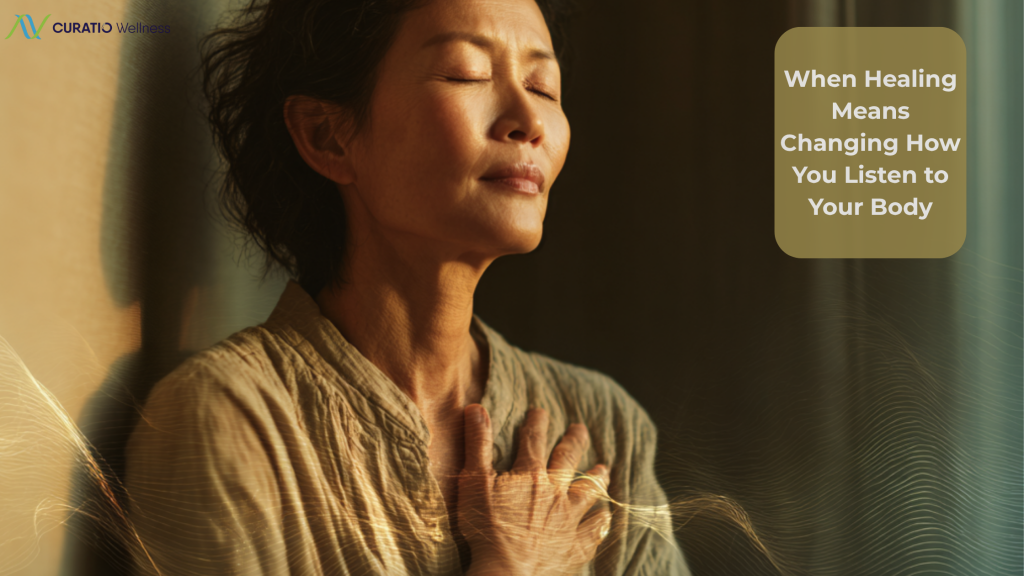
You don’t need to be unwell to feel disconnected from your health. For many people, the phrase “listen to your body” sounds like vague wellness advice, yet it may be one of the most powerful forms of early medicine we have.
In a world where smartwatches tell us when to breathe and apps remind us to drink water, awareness has slowly been outsourced. We measure sleep but forget to rest. We count steps but don’t notice how our legs feel. The body continues to send signals such as fatigue, tension, and restlessness, yet somewhere between busyness and self criticism, we stop paying attention.
Healing, in its truest sense, often begins when we start hearing those signals again.
1. Your Body Speaks in Patterns, Not Words
The body rarely communicates in direct language. Instead, it speaks through patterns. A tight chest after stressful meetings, bloating after rushed meals, or persistent morning headaches are not random events. They are feedback loops.
For many people over forty, these patterns can reveal early imbalance.
Chronic fatigue may indicate disrupted sleep cycles or cortisol imbalance.
Digestive discomfort can reflect irregular eating patterns or stress affecting the gut microbiome.
Aches and stiffness may point to inflammation, dehydration, or long hours of sedentary work.
In Malaysian culture, these signs are often dismissed as “just getting older.” In reality, the body is not breaking down. It is communicating.
Listening does not mean worrying about every symptom. It means observing with curiosity. By noticing how the body reacts to food, rest, and emotional stress, we can respond before discomfort becomes disease.
2. Why Modern Life Makes It Hard to Listen
Human biology evolved around rhythm and recovery. Our nervous system developed in environments shaped by daylight, movement, and periods of rest.
Modern life is very different. Screens, constant notifications, and demanding schedules keep the brain in a continuous state of alertness. When this happens, stress hormones such as cortisol remain elevated for long periods.
Over time, this can dull the body’s awareness signals. Hunger cues become irregular. Breathing becomes shallow. Fatigue appears even after sleep.
Many people describe this state as feeling physically disconnected. Tasks are completed one after another, yet rest never feels truly restorative.
Healing begins when we intentionally create small moments of pause during the day.
A simple example is turning an everyday routine into a mindful moment. Notice the warmth of a morning shower, the first sip of water, or the gentle stretch of your spine when standing after sitting for long periods. These small pauses help the nervous system recognise calm and safety, both of which support physical repair.
3. The Science Behind Body Awareness
Body awareness, known scientifically as interoception, is not just a wellness concept. It is a measurable neurological ability.
Interoception refers to how the brain senses internal states such as heartbeat, breathing, hunger, fatigue, and muscular tension.
Research in neuroscience and functional medicine shows that individuals with stronger interoceptive awareness often experience:
Better emotional regulation and reduced anxiety.
Improved immune response.
More stable blood pressure and heart rate variability.
Healthier weight regulation through earlier recognition of fullness.
When internal awareness is strong, the body signals imbalance earlier. However, chronic stress, trauma, and overwork can weaken this sensitivity. As a result, conditions such as hypertension, prediabetes, and burnout may develop quietly for years before diagnosis.
Rebuilding this awareness does not require medical training. It simply requires consistency and attention.
4. From Fixing to Partnering: A Different Approach to Healing
Traditional healthcare sometimes approaches the body like a machine. A problem appears, and the goal is to repair it as quickly as possible.
Holistic and preventive medicine takes a slightly different perspective. The body is not just a system to repair. It is a system to understand.
Healing is rarely a straight line. Some days bring progress. Other days may feel slower. This does not indicate failure. It often reflects the body adjusting and recalibrating.
Curiosity can replace control by asking simple questions such as, “What might this feeling be telling me?”
Support can replace punishment by choosing gentle movement instead of forcing intense exercise during periods of exhaustion.
Sustainability replaces speed by adopting habits that match individual rhythm rather than unrealistic expectations.
When people begin to work with their body rather than against it, health improvements often follow naturally.
5. Practical Ways to Reconnect With Your Body
Reconnection does not require expensive tools or complicated routines. Small daily practices are often enough.
Morning check in. Before reaching for your phone, take a moment to notice how your body feels. Identify areas of tension or ease.
Post meal awareness. Observe how you feel after eating. Energy changes or heaviness may reveal patterns related to food choices or blood sugar balance.
Breathing pauses. Taking three slow breaths before responding to an email or starting a meeting helps lower heart rate and activate the body’s relaxation response.
Gentle movement. Light stretching or walking supports circulation, dopamine release, and lymphatic flow.
Evening reflection. Asking yourself what helped you feel calm during the day strengthens awareness of supportive habits.
Healing often begins with these simple acts of noticing.
6. Redefining Success in Wellness
Many people measure health success only through numbers such as cholesterol levels, weight, or laboratory results. These metrics are valuable, but they do not tell the entire story.
True wellness also includes qualities we can feel, such as calmness, clarity, vitality, and emotional balance.
Imagine health as a circle that includes nutrition, movement, sleep, emotional wellbeing, and sense of purpose. Each element influences the others.
When one area improves, the entire system often begins to stabilise.
The philosophy behind root cause care, including approaches used at Curatio Wellness, focuses on restoring this balance rather than chasing perfection.
Listening to the body helps maintain that circle.
7. The Quiet Science of Self Trust
Each time we respond to the body’s signals, whether by resting when tired, hydrating when thirsty, or breathing deeply during stress, biological trust begins to rebuild.
The body recognises that its signals are being acknowledged. Over time, hormonal balance improves, inflammation decreases, and recovery becomes more efficient.
This is why wellness is less about strict control and more about connection.
The body already has strong mechanisms for healing. Often, it simply needs space and attention.
Listening becomes a form of discipline that strengthens health over time.
Final Thought
Healing often begins when we shift our question from “What is wrong with me?” to “What is my body trying to communicate?”
The body is not an obstacle to manage. It is a lifelong companion that constantly provides guidance.
When we learn to listen again, that guidance becomes one of the most powerful tools for prevention and wellbeing.
For educational awareness only. Please consult a licensed clinician for personalised advice.
#CuratioWellness #MalaysiaWellness #FunctionalMedicine #HealthyAging #MindBodyConnection #MidlifeHealth #PreventiveCare #HolisticHealing #SelfAwareness #StressHealth #HormoneBalance #WellnessJourney