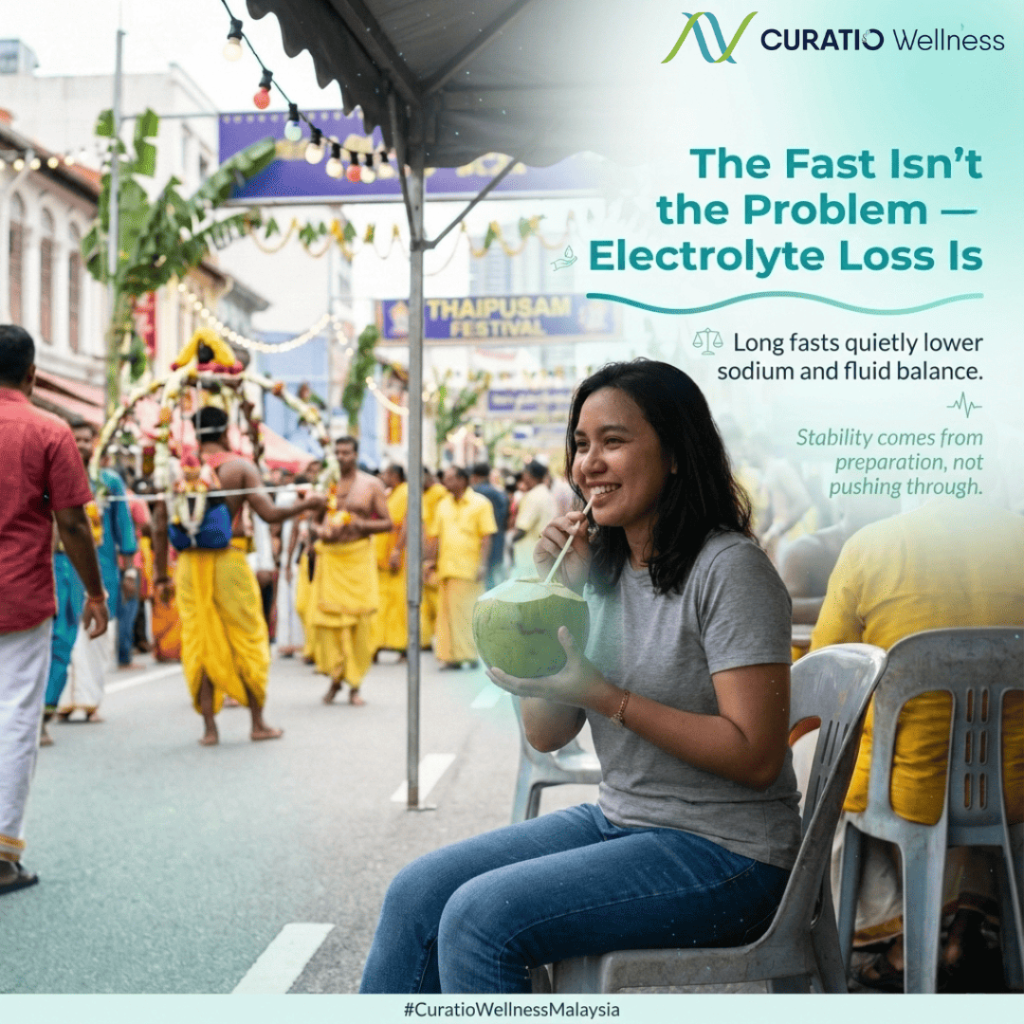
Thaipusam Fasting Starts Soon: The Electrolyte Protocol to Prevent the “Crash”
If you’ll be observing Thaipusam fasting, your body naturally shifts into a different metabolic rhythm. When people feel dizzy, foggy, or unusually weak during longer fasts, the most common reason is not the fast itself, but electrolyte imbalance, especially low sodium, a state known as hyponatremia.
Even during fasting, the body continues to lose sodium through sweat and urine. Without adequate sodium, cells struggle to maintain their membrane potential, the electrical gradient that allows nerves, muscles, and the brain to function smoothly.
A simple preparation principle helps support stability. Paying attention to balanced fluids before and after fasting hours can reduce sudden energy drops.
Options such as broths, coconut water, or a small pinch of salt in warm water, when culturally appropriate and medically suitable, help support electrolyte balance.
The body’s needs during a 24-plus-hour fast are unique. Respecting those needs supports a steadier, safer fasting experience.
For evidence-based explanations around fasting and nutrition, you can follow Curatio Wellness.